
12 Feb 2026
Ukraine: Heating assistance is critically important this win…
Across frontline oblasts of Ukraine — Sumy, Kharkiv, Zaporizhzhia and Mykolaiv — the war has left critical infrastructure under constant threat. Damage to energy systems has disrupted water supply, healthcare and other essential public services, putting communities at risk.

To address these challenges, the Danish Refugee Council (DRC), with funding from the Ministry of Foreign Affairs of Denmark and in partnership with local organisations, is supporting the restoration of critical infrastructure through hybrid and sustainable energy solutions. The goal is simple but vital: keep essential services running, even during prolonged power outages.
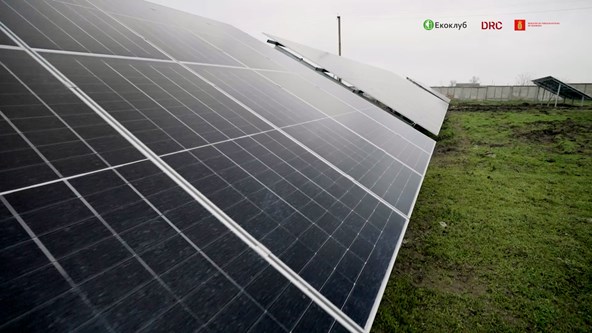
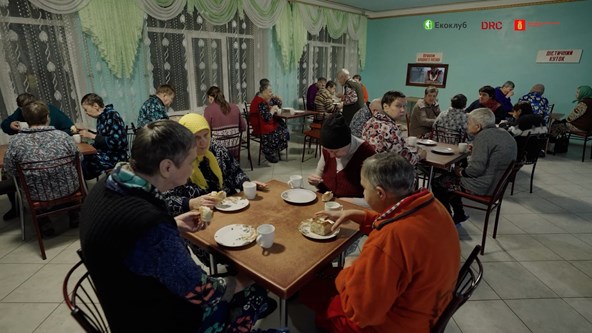
In Mykolaiv Oblast, one of the supported facilities is the Novosvitlivskyi Psychoneurological Residential Care Facility — home to people who depend entirely on uninterrupted care. Frequent blackouts made daily life increasingly fragile. Today, thanks to a newly installed solar power station implemented with the local partner NGO Ecoclub, the facility has greater energy independence and can continue operating when the grid fails.
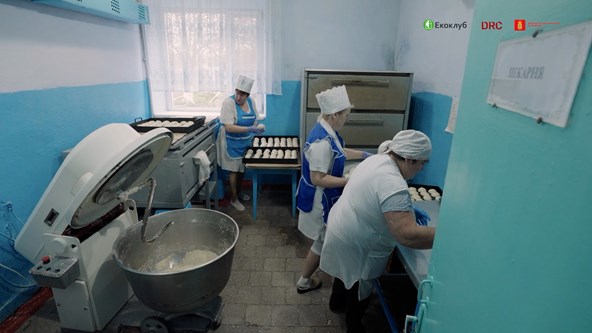
“We used to work through the night preparing meals for the residents of the care facility because sometimes we had only two hours of power per day [due to the outages] and we had to meet this schedule somehow. Now we have a solar power station, which provides electricity for all the staff, the bakery, and the kitchen itself. We are so happy to finally have light,” says Lyudmila, a cook at the care facility.
In addition to ensuring this facility runs smoothly, the solar power station brings substantial cost savings. It is expected that the residential institution will save over one million hryvnias (19,600 euros) annually on electricity bills. Moreover, this single solar power station reduces CO₂ emissions by more than 72 tonnes each year.
“Since the solar power plant costs around 5 million hryvnias (98,000 euros), it will pay for itself in five years,” explains Iryna, project coordinator at the NGO Ecoclub.
The boarding school is one of several institutions in the oblast benefiting from solar energy. Several medical facilities and a water utility in Mykolaiv Oblast were also equipped with hybrid systems, helping protect water supply and healthcare services for the wider community.

For DRC, localisation is currently a key priority — meaning the implementation of projects in close cooperation with local organisations and the strengthening of their capacity. This is why, in Mykolaiv and the oblast, we work with the Ecoclub team, a civil society organisation with extensive experience in installing solar power stations.
/ Viktor, Shelter and Infrastructure Officer
The solar power station enables the Novosvitlivskyi Psychoneurological Residential Care Facility to operate without interruptions during power outages and save on electricity bills. ©Ecoclub, Mykolaiv Oblast, 2025



Further east, in Zaporizhzhia Oblast, solar power is helping hospitals stay operational during wartime outages.
One solar power station is already supplying a Zaporizhzhia city hospital, allowing critical medical equipment to function even when electricity is cut. The system provides up to four hours of autonomous operation — time that can mean the difference between life and death.
Two additional solar power stations will soon be installed in other hospitals in the city, as well as a water pumping station, strengthening the resilience of healthcare and water supply systems under constant pressure.
“It is extremely important that the city's medical facilities have alternative power sources. That is why DRC will install two more power stations in other hospitals, which will be operational in the near future,” says Serhii, Shelter and Settlement Manager.
In Kharkiv oblast, DRC is installing hybrid solar stations with battery storage in communities close to the frontline. In Savynci village, the system supports water supply and distribution, ensuring continued access to clean water during outages.
In Babai village, solar panels are powering a local clinic so medical services can continue uninterrupted.
Each system is designed around the real needs of the location, with capacities ranging from 12 to 60 kW and the ability to operate autonomously for four to five hours.
This support becomes especially critical in winter, when pressure on the energy grid increases and outages can affect heating, lighting, and medical equipment.
New power stations are essential for the hospitals in Zaporizhzhia. ©Zaporizhzhia Oblast Military Administration, 2026
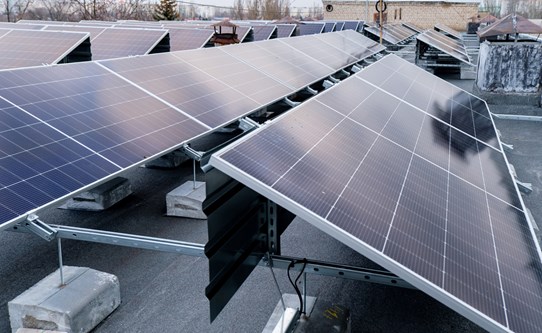

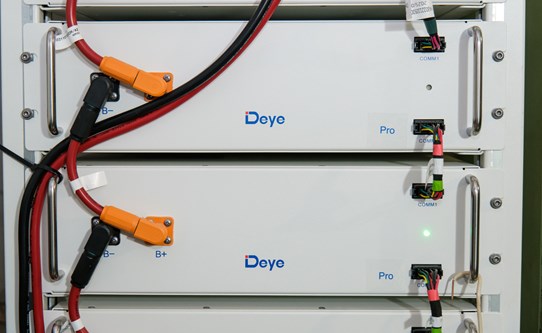



In total, 43 solar hybrid power plants were installed under this project. By investing in sustainable energy, DRC is helping communities protect water systems, healthcare facilities and other critical infrastructure from ongoing energy disruptions.
These hybrid solutions reduce dependence on unstable power grids, lower operating costs and contribute to sustainable recovery.
“Solar energy is the most accessible renewable energy source in Ukraine, and installing solar power plants in communities helps support residents and ensure access to vital services. It also contributes to the reliable operation of public utilities and allows communities to redirect savings on electricity costs towards infrastructure development,” explains Viktor, Shelter and Infrastructure Officer.
Across Ukraine’s frontline oblasts, solar energy is doing more than keeping the lights on — it is helping communities endure, adapt and continue providing lifesaving services in the most difficult conditions.
In February 2026, the war in Ukraine enters its fifth year. For communities along the front line and near the northern border, daily life remains defined by shelling, drone attacks and constant insecurity.
As the conflict evolves, humanitarian needs have deepened rather than diminished. Intensified long-range strikes and systematic attacks on energy, water and other essential infrastructure continue to disrupt basic services and put civilians at heightened risk.
Front-line towns are being emptied, while people living under occupation face grave violations of their rights.
An estimated 10.8 million people across Ukraine need humanitarian assistance. DRC remains committed to supporting those most affected by the war, focusing on communities facing the most severe conditions and ensuring continued access to protection, shelter and life-saving assistance. As humanitarian needs persist, DRC continues to deliver principled, needs-based support alongside national and local partners.